As we take time today to celebrate the grand experiment of our democracy and the 237 years of freedom we have lived and died for, enjoy this old postcard of someone’s Independence Day parade float.
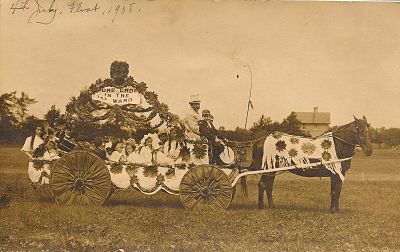
A postcard from July 4, 1908.
I have written of my ninth great-grandfather, Captain Thomas Munson. The captain and his wife, Joanna Mew, had three children: Elizabeth, Samuel, and Hannah. Our family descends directly from Samuel, who is the focus of today’s post. Part of Samuel’s task as an adult was to help found the town of Wallingford in the New Haven Colony. He lived there for 11 years, raising his family and contributing to the life of the fledgling community before returning to New Haven. He and his wife, Martha Bradley, had ten children. Martha Bradley has her own rich heritage which will be fodder for future posts.
The following brief biography of Samuel Munson comes from the Historical address of the first Munson family reunion held in the city of New Haven, Wednesday, August 17, 1887. This material was written by Rev. Myron Andrews Munson and published by Tuttle, Morehouse, & Taylor, New Haven, 1887.
pp 43-44:
The scope of this discourse includes a few glimpses of Thomas Munson’s posterity.
His only son Samuel was by trade a shoemaker, with which that of a tanner was probably combined. He also owned and cultivated farming lands. His military rank was that of Ensign. Early in 1670 he joined with John Mosse, John Brockitt, Nathaniel Merriman, and twenty-two other New Haveners, in the founding of Wallingford, ten miles north-north-easterly. He was nearly twenty-seven, the age at which his father settled in New Haven. His daughter and eldest son had been born before his removal; the next five sons were born during the eleven years of his residence in Wallingford, nothwithstanding which the elder three were born in New Haven, and only Joseph and Stephen in Wallingford; Caleb, and two youngers sons who have no posterity, were born after the return to New Haven in 1681. Ens. Samuel, if we may trust the records, was the first schoolmaster at Wallingford; he was for a time the public drummer; his residence during the early years was the place of public worship, for which some compensation was rendered. He was on the important committee to determine the rules for the allotment of the lands, which were at first all common. At the age of thirty he was elected one of the Townsmen, and he was chosen to the same office the following year and also the last two years he was in Wallingford [1673,1674,1680,1681]. One year he was chosen leather-sealer [1678], another treasurer [1680], two years auditor [1676? 1679], two years recorder of lands [1679, 1681], and five years assessor [1677-1681]. In 1681, at the age of thirty-eight, he was chosen recorder, assessor and townsman, indicating that had he remained in Wallingford he would have been employed very extensively in public service. The first year of Philips’s war [1675], he was commissioned Ensign of the Wallingford Trained Band; next month the colonial council appointed him and another ‘to sign bills;’ and in March following, he and another wrote a letter to the Council in respect to ‘garrison-houses, and watches and wardes.’ In 1679 ‘The Towne made Choyce of En Sam Munson & Eliasaph Preston to goe up to the Hon Gourner . . . to inquire ye Reason why they are deprived of Comission maiestraycy among them.’ After his return to New Haven, he was chosen fence-viewer, constable, and assessor; and during five years, probably ten, beginning with 1683, he and his brother-in-law, Josheph Tuttle, were elected searchers and sealers of leather. For one year, and apparently longer–not unlikely three years, our Ensign was Rector of the Hopkins Grammar School. He died before he was fifty, surviving his father less than eight years. (The Captain’s age was seventy-three.) We may well lament the premature decease of our second ancestor, whose promise and whose performance also had been so admirable. Let it be distinctly recognized, cousins, recognized with veneration, that Ensign Samuel was the common ancestor of all the descendants of Capt. Thomas who bear the Munson name.

Anna Marie Boerner Aderman ca. 1938-1940.
Anna Marie Boerner, my paternal grandmother, was born on this day in 1910, in Niagara, WI. She was the youngest of Martin and Katharine (Storch) Boerner‘s seven children (one of whom died a decade before Anna was born). When Anna was six years old, her mother died during a routine appendectomy. The surgeon accidentally cut Katharina’s liver and she bled to death on the operating table.
Young Ann was then raised by her father and older siblings. She married Oscar Aderman on 9 Jun 1930 and they bought her father’s house. Oscar and Ann insisted that they live upstairs with their young children and that Martin continue to live on the main floor.
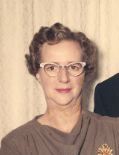 As a young mother of four sons, she managed her house with vigor and compassion. She was trained in the old pioneer system of “Wash on Mondays, Iron on Tuesday, Mend on Wednesday, Churn (butter) on Thursday, Clean on Friday, Bake on Saturday, and Rest on Sunday.” I do not remember her churning butter, but the rest were a good routine for her.
One of my favorite memories of Grandma Aderman was her fascination with new ways. Even though she was a first generation German-American, her parents having immigrated from Germany, she learned to make raviolis and pizzelles from her Italian in-laws and pasties from the local English miners. She wore the most modern clothes and loved bowling and playing cards and board games. She enjoyed a glass of beer, socializing with her friends and family, and supporting her grandchildren in every way she could. And, of course, she had a grandmother’s hospitality: “Would you like another helping? Say yes.”
I am blessed to have had such a terrific grandmother!
I had the blessing of being the pastor of a parish in rural central Wisconsin for ten years. The “home” congregation was established in 1854, just six years after Wisconsin became a state, and two more “daughter” churches in the community were built from the original as more immigrants moved into that part of the state. They have a rich and wonderful Norwegian heritage and know how to use that to propel them into the future.
In the 1800s (and into the 1960s) the church was the social, educational, and religious center of the community. An important part of Sunday morning was having time to catch up with one another and sharing bits of news from the community. It was a time to find out who was sick and who was born; who had moved into town and who was having a good crop in the fields. When someone died in the community, someone would toll the church bell the number of years of that person’s age. For example, if a nine-year old child died, they would toll the bell nine times; if someone was 71, they would toll it 71 times. The church was typically the first structure built in a community, usually on a hill, and then people would build around the church, even when it was farmland. That way, everyone could here the bell ringing, would stop what they were doing to count the number, and then know who had died–usually because they knew who was ill from Sunday’s conversation.
The women’s organizations served a very similar kind of function. Originally, the women gathered in someone’s home for the day. They brought their children along and the men often joined them for lunch. It was the one day each month the women could get off the farm and meet with each other. They shared recipes, got advice from each other about how to treat a rash or a fever, got the news about who was “failing” in health and which families were struggling to survive. They quilted together. The younger women and young mothers could learn from the more experienced women and everyone could help each other with life’s joys and challenges. Over time, they also added a Bible study, led by the pastor, and then realized the value of helping support “missions.”
I do not know just how active my female ancestors were in their congregations’ women’s organizations, but it is fun to imagine them going to their “circle” and engaging the conversations and activities. As the decades have passed, the “circles” do not have the same kind of necessity as they had previously. I wonder if what may be lost is the joy of a group of women coming together to share their lives, support each other, and delight in the power of that kind of community.
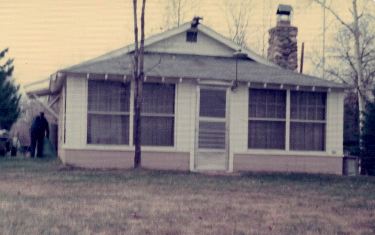 Among my favorite memories of childhood are the days and weeks we spent at Grandma and Grandpa’s (Oscar and Anna Aderman) cottage on Timms Lake in Marinette County, WI. Each spring Grandpa would prime the water pump (there was no water in the faucets otherwise) and Grandma would “air out” the inside while wiping away the spider webs and mouse nests that had accumulated over the winter. The wood fireplace warmed up the small living area when it needed heat and the cement structure kept it cool in warm weather.
Down a long flight of outdoor steps was a dock and small boat. Lots of hours of swimming and fishing and playing with the cousins took place on this lake.
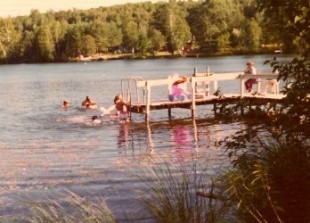
The cousins swimming at the cottage.
When, as teenagers, we got old enough to drive, we would venture down Highways 8 and 141 from Niagara and find our way to the cottage. There were two bedrooms and a little bathroom on one side of the cottage, a porch on the opposite side, and a great room that had the living room, dining area, and kitchen. We played cards, board games, and read books; we played croquet in the long front yard, and relished the time we had as a family. As summer begins, I find myself reminiscing about those lovely, carefree days at the cottage.
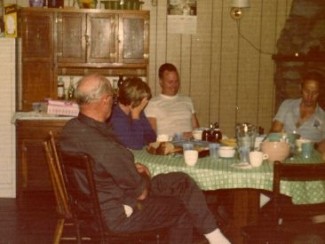
Visiting with family.
Fredericke (Bergemann) Adermann has been written about earlier. Her three younger children (and possibly their older stepbrother, Ferdinand) are assumed to have immigrated with her to Illinois, the best records indicating they sailed over on the S.S. Klopstock, arriving on August 25, 1875.*
Her oldest son, Ferdinand (my second great grandfather), was born of Fredericke and Christian Adermann. After arriving in the U.S., Ferdinand remained in Effingham County, Illinois and worked on the railroad throughout his adult life. Fredericke’s second son, August Frederick, born through her marriage to William Adermann, lived in Effingham County, Illinois as a boy, but by 1900 had moved to Martin County, MN, where he made his living as a farmer. He and his wife, Martha (Bolter), had a daughter and four sons.
Their third oldest son, Herman Erwin, was born July 15, 1910. He married Marian Laura Becker on March 27, 1937 in Minneapolis, MN. In 1954, they adopted 8-year old Charles and in 1955 they gave birth to a daughter, Joyce Colleen.
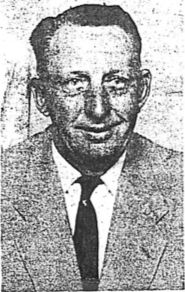
Herman Aderman
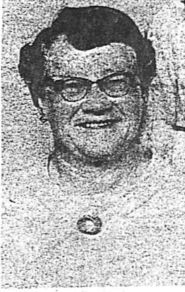
Marian Aderman

Charles Aderman
Herman and Marian’s lives came to a tragic end on June 2, 1980 when Charles shot them in their home and then killed himself. Here is the news report from The Amboy Herald, dated June 12, 1980:
JUNE 2 SHOOTING TRAGEDY SHOCKS AMBOY AND VERNON CENTER
The neighboring communities of Amboy and Vernon Center were still in a state of shock this week following the tragic shooting deaths of Herman Aderman, age 69, his wife Marian, age 66, and their 32 year old son Charles Aderman, of Brooklyn Park, at the elder Aderman’s farm south of Vernon Center last Monday.
According to the Blue Earth County Sheriff’s Department, Herman and Marian Aderman were apparently each shot once in the head with a 22 caliber rifle, by their son who then took his own life with the same rifle. Following an investigation, Blue Earth County Sheriff LaRoy Wiebold said his office did not have the evidence to make a judgement about motivation for the shootings, and indicated that the question would not be pursued. “Speculation is useless,” Wiebold said.
The victims of the shooting were discovered Tuesday night by Steve Spence, Vernon Center, who rents part of the Aderman farmland. County Sheriff deputies were immediately dispatched to the farm and sealed off the area during their investigation. Residents of the area around the Aderman farm were involved in the investigation as officials attempted to determine both the time of the shootings and reasons for it happening.
People who knew the Aderman family are trying to pinpoint the reason for the shootings, but come up with no clues as to why the shootings occurred. “They loved Chuck from the day that he came to live with them,” said one neighbor of the Adermans and their adopted son. “Who can ever guess why it happened, but we know Chuck couldn’t do it in his right mind.”
It is known that Charles Aderman was scheduled to appear in Hennepin County District Court for sentencing on two counts of assault in connection with an April 9 incident in Brooklyn Park in which he threatened his wife and a male friend of hers with a 22 caliber rifle. Aderman had pleaded guilty to the assault charge and was staying temporarily at his parents’ farm home awaiting his court appearance.
Friends of the family say it is difficult to isolate what factors were instrumental in the tragic shooting and suicide. “There were an awfully lot of things going against Chuck,” explained a former classmate, “dating back years and years. Herman and Marian never stopped loving Chuck though.” A poem read at the funeral services Saturday, taken from a book of Marian’s favorite poetry, expressed what family members and friends say portrayed their feelings about their adopted son.
Mother’s Tribute to My Son
Wilted flowers in a bunch,
A very hungry, “What’s for lunch?”
Untied shoes and dirty hands,
His pockets filled with rubber bands.
Birthday parties, baseball games,
Teddy bears with silly names,
Cowboy hats and fishing trips,
Discovering gold on pirate ships.
Santa Claus, electric trains,
Finding puddles when it rains,
Skinned up knees and broken toys
Fill the world of little boys.
But just as part of Nature’s plan,
My little boy is now a man,
And I no longer dry the tears
That filled my life for all those years.
My world of noise and hurried hugs,
Of worms and frogs and ladybugs–is gone.
But I cherish special times,
Bedtime stories, our made-up rhymes,
Chocolate cakes, the games we’d play,
And how we’d chase bad dreams away.
We had songs to sing, secrets to keep,
Prayers to be said before falling asleep,
A kiss goodnight, Now a day’s play done,
Thank you, God, for my wonderful son, –Leslie Petty, Liberty, MO.
One family member struggled with the fact that Chuck’s personality was one factor that would probably never be fully understood. “Chuck’s first seven years of life were terribly traumatic and we’ll never know how much damage was done before he was adopted by Herman and Marian. Before being adopted, Chuck was a victim of a foster home shuffle and also suffered physical abuse that surely had a serious effect on him.”
In his eulogy at services last Saturday, Rev. Clifford Rogers stressed the importance of a child’s early years and the long-lasting impacting of those years. “The family realizes that Chuck is not to blame for everything that happened,” a close friend said Monday.
*Source Citation: Year: 1875; Arrival: New York, New York; Microfilm Serial: M237; Microfilm Roll: 399; Line: 9; List Number: 785.
On this day, May 28, in 1919, 23-year old Monroe Hope married 28-year old Ethel Barbara Woodington. He had courted her for a while (one of the postcards he wrote her was shown earlier). The local paper announced their marriage with a description of the wedding:
Hope-Woodington Marriage
In Dubuque [Iowa] at the First Congregational Church at 4 p.m. of Wednesday, May 28 the pastor Rev. J.F. Milligan united in marriage Monroe Hope of Bloomington [Wisconsin] to Miss Ethel Woodington of Cassville [Wisconsin]. The bride was attired in a a handsome costume, all white from picture hat to shoes. The dress was georgette crepe with trimmings of embroidered satin; bouquet of brides’ roses. There were no attendants. The bride’s mother and brother, Mrs. F.C. Woodington and son Jennings, and her aunt and cousin, Mrs. Geo. M. Bishop and daughter Ruth, were present at the ceremony. Six o’clock dinner was served to the bridle party at the Bishop home in Dubuque. Thursday was a dinner at the family home of Mr. and Mrs. F. C. Woodington in Cassville. Mr. and Mrs. Hope go immediately to their home, the Hope homestead in Little Grant Township. Mrs. Hope has been a very successful teacher for 10 years and will certainly be a most efficient helpmate to the young man to whom she has give her heart and hand. May they live long–be happy and prosper.
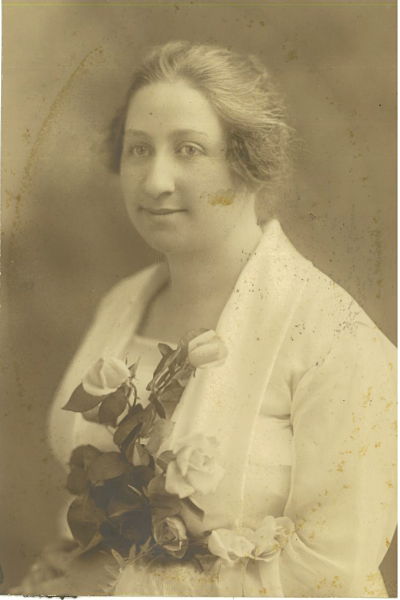
Ethel Woodington Hope in her wedding dress.
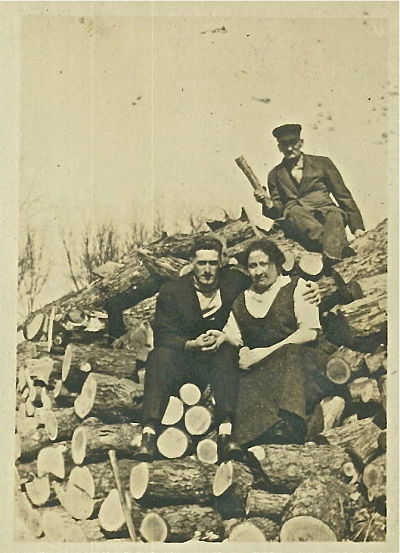
Monroe and Ethel Hope as a young couple.
In the same way that genealogy tells the stories of Whence We Come personally, so does our collective American history. On this Memorial Day, 2013, it is time to remember some of my ancestors who were military veterans and who fought for this nation and the freedoms we have. So, I remember . . .
The Colonial Militia:
Captain Thomas Munson, (1612 – 1685), my maternal 9th great grandfather, served in the New Haven Militia as did his son
Ensign Samuel Munson (1643 – 1693), my 8th great grandfather.
The Revolutionary War:
Private Samuel Munson, (1739 – 1827), my maternal 5th great grandfather
and his brothers
William Munson (1731 – 1815) and Peter Munson (1735 – 1830).
John S. Blue, (1750 – 1833), my paternal 6th great grandfather,
John McNary (1752 – 1830), another paternal 6th great grandfather.
The War of 1812:
Major Uriah Blue (1775 – 1836), my paternal 1st cousin, 7x removed.
The Civil War:
Moses Woodington (1837 – 1919), my maternal 2nd great grandfather along with his brother, Jonathan Woodington (1842 – 1918).
Several of my paternal Blue Family cousins, serving for both the North and the South:
Lt. John Blue and his cousin, Monroe Blue, both fighting for the South
David C. Blue, fighting for the North
Abner Blue, part of the Underground Railroad
William Marshall Blue, fighting for the North
John and his son, Thomas, Dull, fighting for the North.
World War I:
Private Rolland “Raleigh” Woodington (1892 – 1930), and his brother
Private Walter Woodington (1900 – 1949), my maternal grand uncles.
World War II:
My paternal grandfather’s younger brothers Virgil, Edgar, and Edwin Aderman, my grand uncles.
Donald Aderman, my paternal 1st cousin, 2x removed.
Thank you, each of you, for sacrificing something of yourself for your descendents.
There is a great website from Michigan State University that is being promoted in genealogical circles called Feeding America. I have enjoyed reading through some of the historic recipe books they have put online and imagining my ancestors cooking and eating in ways similar to those in the cookbooks.
One of the very first American cookbooks–one that had recipes made especially for the young nation’s ingredients and eating styles rather than brought over from the “old country”–is one published in 1798 with the rather expansive title of American Cookery: or the Art of Dressing Viands [“viands” means “food” or”provision”], Fish, Poultry, and Vegetables, and the Best Modes of Baking Pastes, Puffs, Pies, Tarts, Puddings, Custards, and Preserves And All Kinds of Cakes from the Imperial Plum to the Plain Cake. Adapted to This Country and All Grades of Life.
The book is authored by “Amelia Simmons: An American Orphan.” I will share more of her recipes as time goes on, but wanted to offer a couple of her recipes for “Syllabub” which is a dessert made from milk and wine or cider, sweetened and served with whipped cream. Have fun with the slight difference in the old small case “s” as you read her recipes.
Amelia Simmons’ recipe for “A Fine Syllabub from the Cow”:
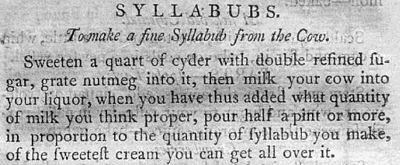
From “American Cookery” published in 1798.
For those who preferred “Whipt Syllabubs”, she offered this recipe:
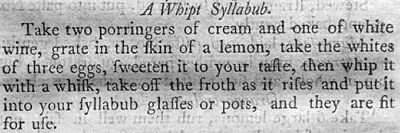
From the American Cookery cookbook.
Finally, for those who wanted to top their Syllabub with cream, they could use this recipe:
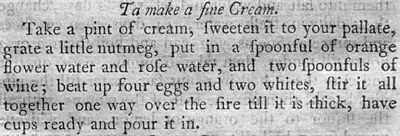
A recipe for Cream from the American Cookery Cookbook.
Looking through some old pictures of my grandmother’s (Ethel Woodington), I noticed two of them taken after the tornado of May 21, 1918. Checking on this tornado with the National Weather Service archives, I learned that the tornado was among the worst to hit Grant County, WI where the Hopes and Woodingtons, Fralicks and Sturmers lived. The tornado was about 80 miles long and moved from northeast Iowa through southwest Wisconsin. It was an F4 tornado (with winds approaching 200 miles per hour) and left 8 people dead and 100 people injured as it raged through those 80 miles. While tornadoes are not uncommon in this region, this fierce of a storm is. Only one other F4 has been recorded in Grant County, WI over the years and that was on June 22, 1944.
According to the National Weather Service, Grant County was not hit as hard as those behind and ahead of it, with the storm seeming to have “lifted and reformed” over the area. Yet, the damage was significant . . .
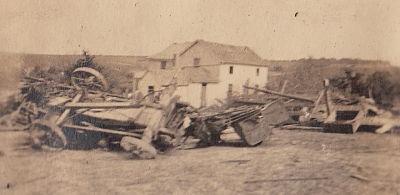
May 21 1918 Tornado damage in Grant County, Wisconsin.
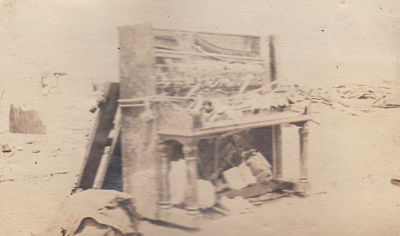
Huff’s Piano after the Tornado hit.
Oscar and Anna (Boerner) Aderman made their home “behind the mill” in the home Anna grew up in with her father, Martin Boerner, Sr. In the early 1960s, the paper mill needed to expand so bought the homes from the residents and helped them relocate in another part of the small mill town. Oscar and Ann were among those who moved into a new home with five acres of land very near the Menominee River. They sold their old home for $13,000 and bought the new one (shown below) for $15,000. In addition, the mill told the residents they were could take whatever they wanted of the old houses because they were going to just get rid of them. Grandpa took them seriously and took all that he could–right down to the electrical wiring in the walls.
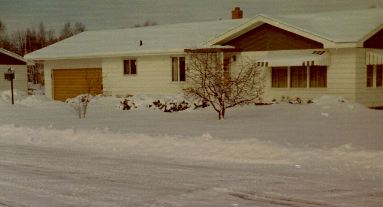
Oscar and Anna Aderman’s new home.
One of the highlights for them in this new home was having plenty of land for Oscar to have a machine shop and a large garden. They started early in the spring getting the soil ready for seeds, tried to outsmart the deer and rabbits all season long, enjoyed eating the fresh vegetables and sharing them with many people, and freezing and canning them at their peak.
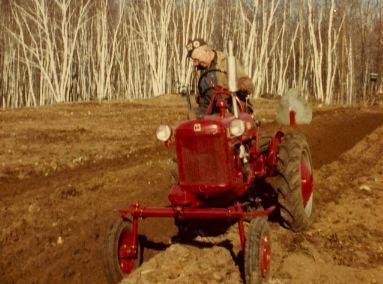
Oscar plowing up the garden in the spring.
Anna worked hard to get the sauerkraut made from their cabbage, the brussel sprouts frozen, and the green beans canned. Oscar built a root cellar under the garage to store the canned goods and some of the fresh potatoes, carrots, and squash in an enclosure filled with dirt. He watered the garden with rain water that he collected in 50-gallon barrels from the downspouts on the house. It was always a huge undertaking and always a successful garden.
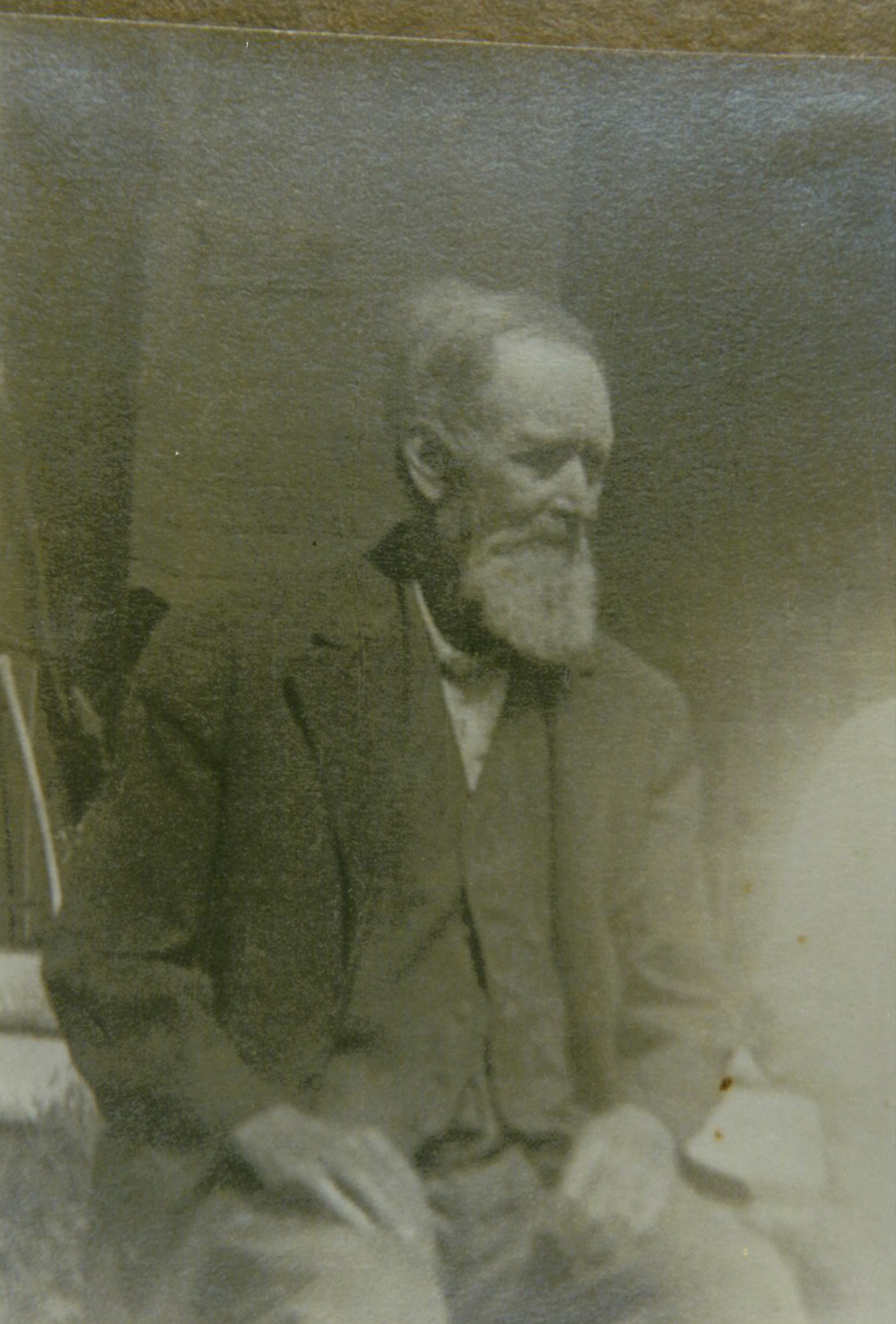
Michael William Hope
On May 10, 1897 Michael William Hope became a naturalized citizen of the United States. He came to the United States from Darlington in the County of Durham, England in 1846. He was six years old at the time and immigrated with his father, grandfather and other family.
He had established his farm at this point in his life and had four children with his second wife, Mary Ellen Fralick. Their youngest child, my grandfather Monroe, was only two years old when Michael was naturalized.
As was the custom and law at the time, immigrants could become naturalized at the local courthouse. The Hope family had settled in Grant County, Wisconsin and went to the County Courthouse for this important transition. Mary Ellen had been born in Cassville, so was already a U.S. citizen as would have been the children who were also born in Wisconsin. Had they not already been citizens, Michael’s naturalization would have automatically made them citizens.
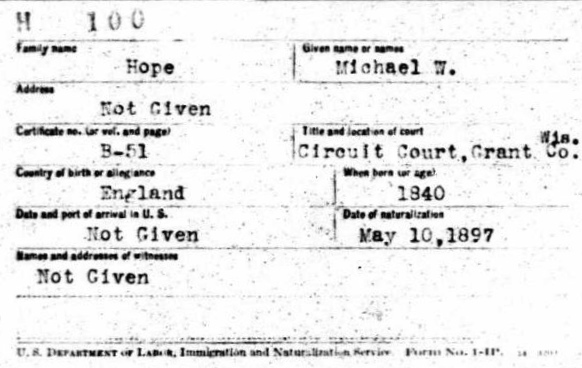
Naturalization Record from the Circuit Court of Grant Co. Wisconsin
Fifty-six years ago today, May 1, 1957, Carl Otto Aderman died tragically in a shooting accident. (Carl is the grandson of Fredericke Bergemann and is my 1st cousin, 3x removed.) As the newspaper wrote the story:
Lake Crystal Farmer Shot Accidentally
The death of a 51-year old Lake Crystal farmer who apparently tripped and shot himself in a field near his home early this morning was ruled accidental today by Dr. George R. McNear, Jr., Blue Earth county coroner.
The farmer, Otto Aderman, was found by his wife about 7:30 this morning. He had left to go to work in the field at daybreak. Mrs. Aderman investigated when she saw the tractor standing idle in the field about a quarter of a mile from the house.
Aderman was found lying in a drainage ditch on the side of a fence running alongside his field with a .22 caliber rifle laying near him. Blue Earth County Sheriff Jay Mickelson who investigated the death said it appeared that Aderman was out hunting gophers when he tripped and discharged his rifle. A check by the sheriff showed, he said, that Aderman had an interest in hunting.
Time of the accident was not determined definitely. Mrs. Aderman did not hear a shot, she told authorities. Her husband left the house about daybreak this morning, and Mrs. Aderman found him at about 7:30 a.m.
An autopsy by Dr. McNear was completed before 1 p.m. today. Aderman is survived by his wife and two sons, at home. He had farmed near Lake Crystal for many years. Funeral services are pending.”
Carl Otto was the son of August Frederick Aderman (1867v- 19150) and Martha Bolter. One of his siblings, William Gustav Aderman, was a twin. He also had three other siblings: Meta, Herman and Herbert. He married Lorraine Estell. Carl’s father, August, was a stepbrother to my 2nd great grandfather, Ferdinand.
Ninety years ago today, April 28, 1923, Floy Bates Aderman went into labor. She already had five children and was about to be blessed with more. It turns out she had two very big boys waiting to be delivered! Here is how their sister, Ede Aderman Adams (1925 – 2011) described it in the Aderman Memory Book: Reminiscences from the family of Carl & Floy Aderman:
When Mom was expecting with the twins there was no such thing as prenatal care. So, she had no idea she had two babies inside there. Doc Landsborough was summoned from town for the delivery and our neighbor, Mae Lance, hurried over to act as midwife. The folks’ bedroom became the delivery room. Edgar arrived first at 9-1/4 pounds. Ol’ Doc Landsborough, knowing another baby would be born, became very concerned for Mom. Never anticipating there would be two, she wondered why Doc hung around so long. About thirty minutes later Edwin made his debut–and he was bigger than Edgar–9-1/2 pounds! Mom cried because she didn’t know how they could raise two more kids. Doc assured her that she was the luckiest woman in the world to have two healthy and normal boys. He laughed and thought it was wonderful. Mom would later agree.
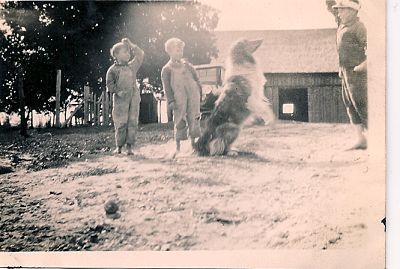
Edgar and Edwin as young boys on the Daggett farm.
Darrell, Floy’s oldest grandson, remembers hearing that Carl was working away from the farm when the twins were born and learned about it when he returned home. Apparently, he went to sit down in one of the chairs but there was a baby laying in it so he went to sit in the other chair and it, too, had a baby in it. He asked, “How many babies are there?!”
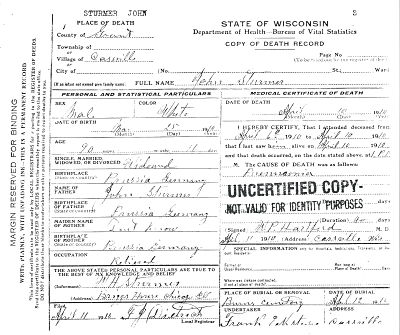
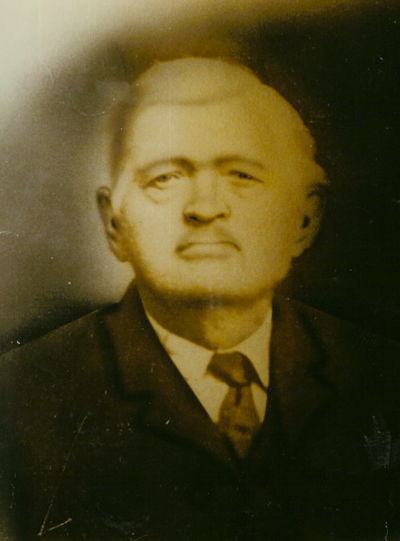 On this day in 1910, John Sturmer, my 2nd great-grandfather, died of pneumonia in Cassville, Grant County, Wisconsin. He had just turned 90 years old a few weeks earlier, on March 25. He was buried two days later in the Burns Cemetery in Beetown, Grant County, Wisconsin.
John was born in Neufilzen, Rhineland, Germany in 1820 to Peter and Susanna (Cornelius) Sturmer. Peter was a shoemaker in Neufilzen and tried to teach his son the trade. John did not like that occupation and decided he wanted to be a farmer. He immigrated to the United States in 1847 and settled in New York for two years. He moved west and landed in Galena, JoDaviess County, Illinois. He and Barbara Barton were married in JoDaviess County, Illinois on December 28, 1853. Soon after, they moved to Grant County, Wisconsin. By 1856, he had become a naturalized citizen of the United States and in 1860 he had bought 40 acres* of land and was farming.**
He and Barbara had eleven children, ten of whom grew to adulthood. Only Adeline died in childhood when she got the measles. John lived a full life and left a legacy for his many descendents.
*According to land purchase records at Grant County Courthouse.
**1860 U.S. Census


 Whence We Come